The Valley is not one market. Brownsville, McAllen, and Edinburg each have more than 100,000 residents (Census QuickFacts: Brownsville, McAllen, Edinburg), they are spread across two counties, and customers search in English, Spanish, or both. Your next customer may not start by asking a neighbor for a recommendation. They may open Google, type something like "AC repair near me," "best family dentist in McAllen," "used cars in Brownsville," or "immigration attorney near Edinburg," and make a decision within minutes. Sometimes they call directly from the search results. Sometimes they check photos, reviews, hours, directions, or your website before they ever speak with you.
That is why local SEO matters. For many RGV businesses, search visibility is not just a marketing vanity metric. It is a practical sales channel. When your business shows up in the right local searches, with accurate information and a trustworthy presence, it can turn searchers into phone calls, form fills, appointments, store visits, consultations, and repeat customers.
Local SEO is especially important in the Valley because the market is regional but not generic. A business in McAllen may also serve Edinburg, Mission, Pharr, San Juan, Alamo, Weslaco, and La Joya. A company in Harlingen may pull customers from San Benito, Brownsville, La Feria, Mercedes, and Raymondville. Some brands need to reach Spanish-dominant households, bilingual families, Winter Texans, cross-border shoppers, healthcare consumers, contractors, and small business owners across a wide service area. That reality should shape the way your SEO is planned.
The goal is not to "game Google." The goal is to make your business easier to understand, easier to trust, and easier to contact when someone nearby is actively looking for what you sell.
Local SEO Is Different From Regular SEO
Traditional SEO often focuses on getting a website to rank nationally or across a broad topic. Local SEO focuses on helping a business appear when the search has local intent. That includes Google Maps results, the local pack, organic results, business profile results, and search features that help people make decisions quickly.
For local results, Google says it primarily considers relevance, distance, and prominence. Relevance is how well a business profile matches what someone is searching for. Distance considers how far each potential result is from the location term or the searcher. Prominence reflects how well-known or trusted a business appears to be, based on signals such as information Google has about the business across the web, links, articles, directories, and review count and score.
For an RGV business owner, that means local SEO is not one single task. It is a combination of your Google Business Profile, your website, your reviews, your location pages, your service pages, your local citations, your content, and your ability to convert visitors once they find you.
Why Local SEO Matters in the RGV Right Now
The Rio Grande Valley is not a small, isolated market. The broader four-county region of Hidalgo, Cameron, Starr, and Willacy is commonly discussed as a market of roughly 1.4 million residents when unincorporated areas are included, and the incorporated communities alone passed the one-million-resident mark in 2025 according to reporting based on U.S. Census estimates. Cameron County alone had an estimated population of 433,946 in July 2025, and Hidalgo County remains one of the largest population centers in South Texas.
That matters because local demand is deep, but fragmented. Customers do not all search the same way. A person in Brownsville may use different location modifiers than someone in McAllen. A homeowner in Edinburg may search by neighborhood or nearby city. A parent may search in English, Spanish, or a mix of both. A business owner in Weslaco may want a provider that understands South Texas, not a national vendor with generic copy.
At the same time, search behavior has become more compressed. More people make decisions directly from Google Search or Maps. Google Business Profile performance reporting is built around customer interactions such as views, clicks, calls, booking actions, messages, and direction requests. That means your visibility and your profile experience can influence whether the customer contacts you before they ever read a full webpage.
The businesses that win locally are usually not the ones with the biggest websites. They are the ones that make it clear who they serve, what they offer, where they operate, why they are trustworthy, and what the customer should do next.
Start With a Strong Google Business Profile
For many local searches, your Google Business Profile is the front door. It is often the first impression customers see when they search your brand, your category, or a service near them. If the profile is incomplete, outdated, or thin, you may lose calls before the customer even considers your website.
A strong profile should include accurate business name, address, phone number, website, hours, categories, services, appointment links, business description, photos, and service areas where applicable. It should also reflect how people in the Valley actually look for you. A home service company may need to clarify whether it serves McAllen, Edinburg, Mission, Weslaco, Harlingen, Brownsville, and surrounding communities. A clinic or office may need to make appointment options obvious. A dealership, law office, or contractor may need photos that build trust before the first call.
Categories are especially important. The primary category should describe the main business as clearly as possible. Secondary categories can support additional services, but they should not be inflated just to chase more searches. A miscategorized profile can confuse Google and customers.
Photos also matter more than many businesses think. Real photos of your office, team, vehicles, storefront, projects, service area, products, or customer-facing experience help reduce uncertainty. Stock photos may look polished, but they often fail to prove that your business is real, local, and active.
Practical RGV move: review your Google Business Profile as if you were a customer in McAllen, Brownsville, Harlingen, Edinburg, Mission, and Weslaco. Does the profile make it obvious that you serve the area they searched from? Does it show proof? Does it make calling or booking easy?
Build Service Pages That Match Real Buying Intent
A lot of local websites fail because they have a homepage, an about page, a contact page, and very little else. That may be enough for someone who already knows your brand. It is usually not enough for someone comparing options on Google.
Each important service should have its own clear page. A roofing company should not rely on one general "services" page if it wants to rank for roof repair, roof replacement, storm damage repair, commercial roofing, and metal roofing. A clinic should not bury every treatment under one generic menu. A law firm should not expect one practice-area overview to capture all local demand.
A strong service page explains who the service is for, what problem it solves, what the process looks like, what questions customers usually ask, what makes the business credible, and what the next step is. It should also make the local context clear without stuffing "Rio Grande Valley" into every line.
Use Content to Answer the Questions Your Customers Actually Ask
Blogging still has value, but only when it answers meaningful questions. Generic articles like "Why SEO Is Important" or "Top 5 Benefits of Hiring a Contractor" rarely separate a local business from everyone else. Better content speaks to real decisions customers are trying to make.
For an RGV business, that could include topics such as: how to choose a provider in McAllen, what documents to bring to an appointment, how seasonal weather affects a service, what financing options may look like, how long a common repair takes, what bilingual customers should expect, or how to compare providers across Brownsville, Harlingen, and Edinburg.
Google's Search Central guidance emphasizes helpful, reliable, people-first content. That principle is useful for local businesses because helpful content often mirrors the sales conversation. If your team answers the same questions every week by phone, email, or in person, those questions may deserve a page or article on your website.
This does not mean every blog post needs to be 3,000 words. It means every post needs a job. Some posts educate. Some support local rankings. Some help sales teams explain a process. Some build trust before a consultation. Some give Google more context about your services and service area. The best content strategy connects all of those pieces.
Make the Mobile Experience Effortless
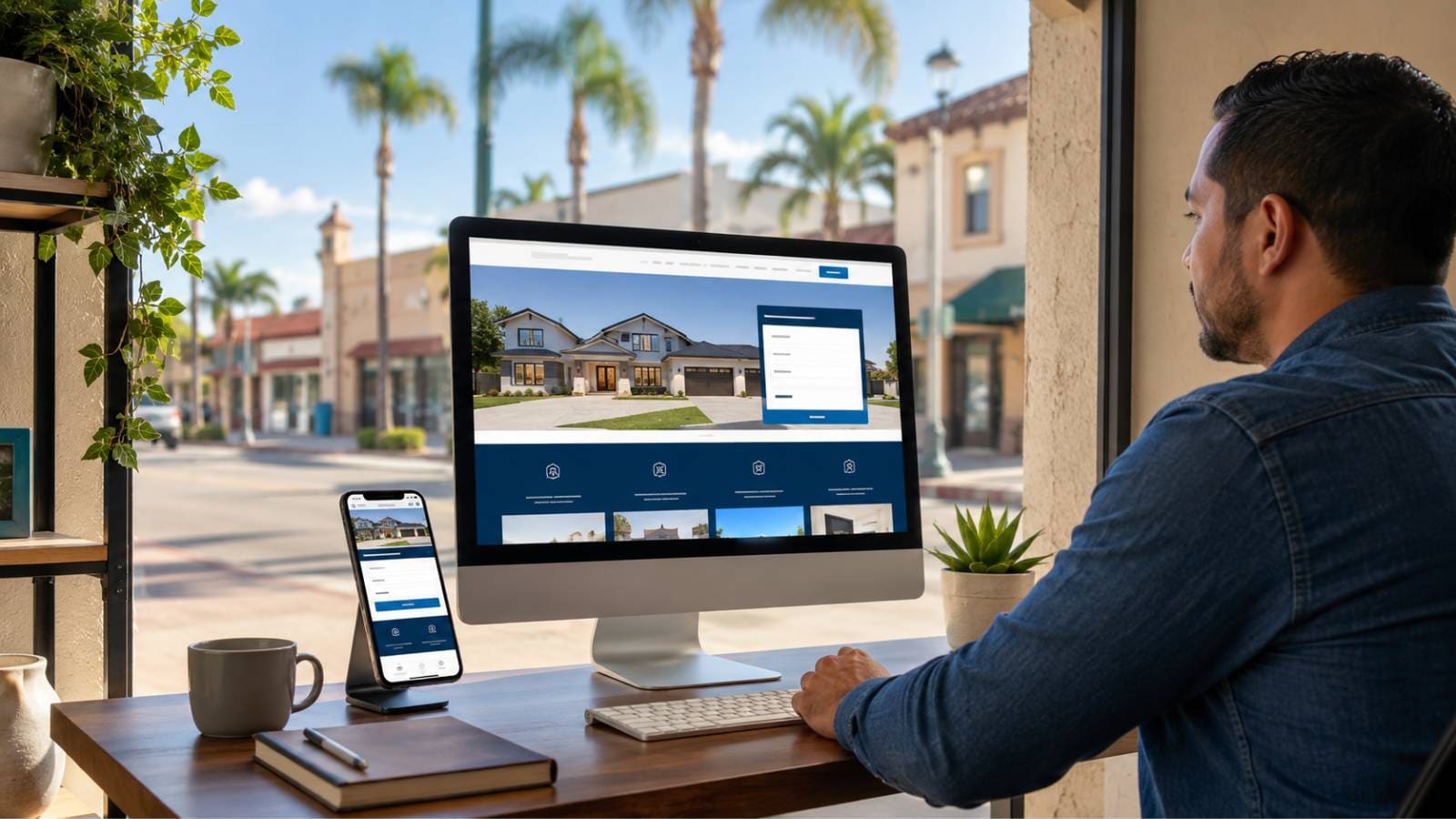
In the RGV, mobile experience is especially important because many customers will search from their phone while they are between errands, at work, at home, or on the road. If the website is slow, cluttered, or hard to use on mobile, SEO may bring the visitor in but the website may lose the lead.
Every important page should answer three questions quickly: Am I in the right place? Can this business help me? What should I do next?
Track Calls, Leads, and Customer Actions, Not Just Rankings
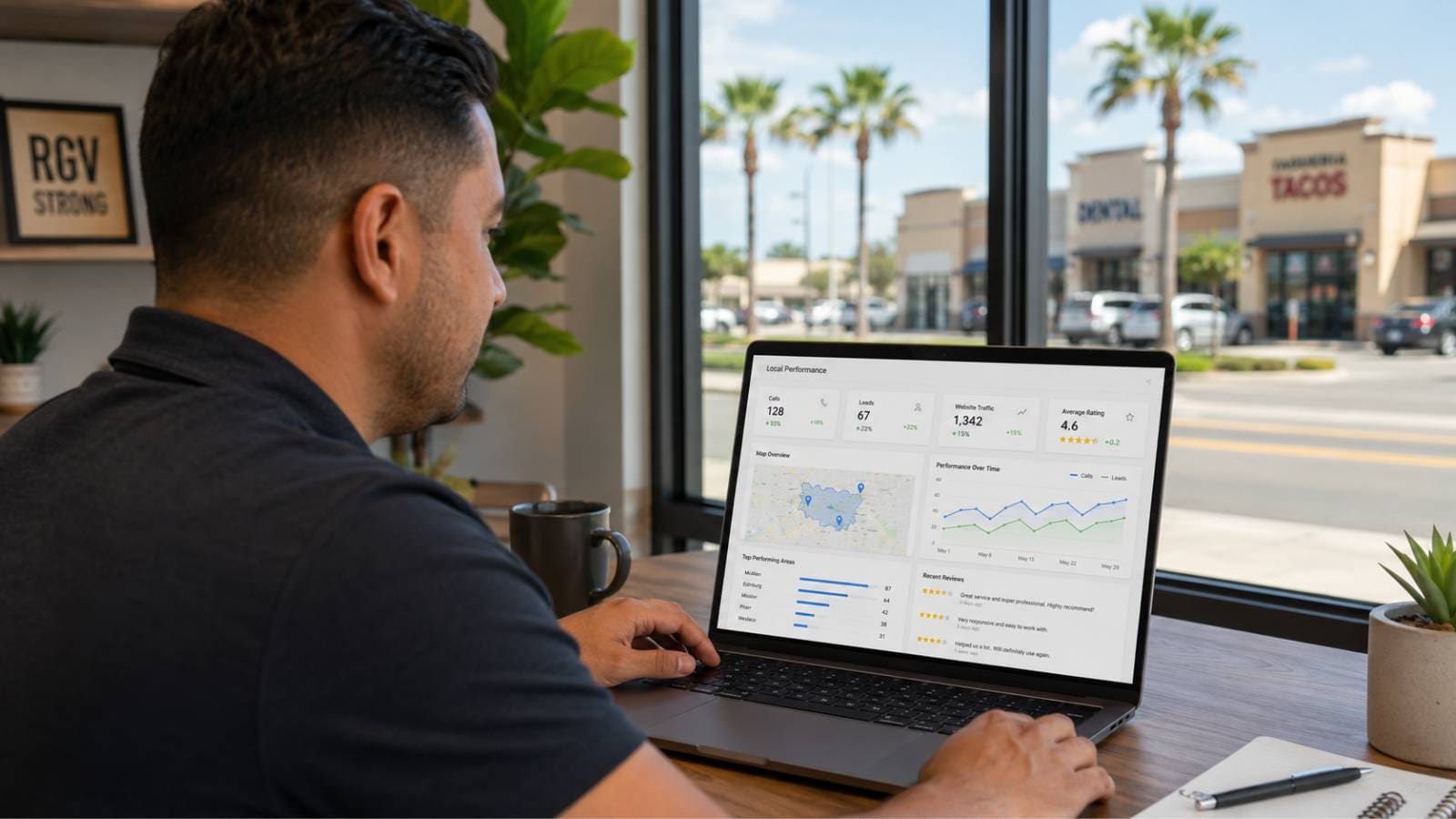
Rankings matter, but they are not the only measure of success. A business can rank better and still not grow if the traffic is poor quality or the website does not convert. A more useful local SEO scorecard tracks visibility, engagement, and business outcomes together.
At minimum, RGV businesses should monitor Google Business Profile performance, Google Search Console queries, website form submissions, phone calls, direction requests, organic traffic, landing page performance, and conversion rates. Google Business Profile performance reporting can show how customers interact with the profile across Search and Maps, while website analytics can show what happens after they click through.
A Practical 90-Day Local SEO Plan
Days 1–30: Fix the foundation. Audit your Google Business Profile, website, main service pages, technical issues, page speed, mobile experience, forms, calls to action, analytics, Search Console, and current rankings. Clean up obvious issues first. Make sure customers can find accurate information and contact you easily.
Days 31–60: Build the local content and conversion layer. Improve your highest-value service pages, add or refine location pages, create FAQs, improve internal links, add proof points, and publish the first round of helpful local content. This is where your website starts to feel less generic and more aligned with the Valley customers you want.
Days 61–90: Strengthen authority and measurement. Focus on reviews, local citations, link opportunities, partnerships, content updates, and reporting. Look at which pages are gaining impressions, which profile actions are increasing, which calls are qualified, and which gaps still need attention.
Bilingual SEO Done Right
For some industries, Spanish-language pages, bilingual FAQs, Spanish GBP posts, or bilingual review responses may help customers feel more comfortable taking the next step. For others, English-first content with occasional Spanish support may be enough. The right answer depends on the business, the audience, and the sales process.
The mistake is assuming bilingual SEO is just translation. Good bilingual SEO considers intent, vocabulary, local phrasing, trust, and customer comfort. A literal translation may miss the way people actually describe services in the Valley. A better approach is to create content that sounds natural to the audience and still supports search visibility.
Turning Valley Searches Into Customers
Our Spanish SEO page explains how we build bilingual search visibility, and the Legacy Home Care Services case study shows that approach in a real healthcare engagement across southern Texas. If you serve several Valley cities, our guide to local SEO for multi-location businesses covers how to do it without duplicate pages.
Local SEO works best when it is tied to real business outcomes. The point is not to rank for every keyword. The point is to show up for the searches that matter, earn the customer's trust quickly, and make it easy for them to call, book, visit, or request a quote.
For Rio Grande Valley businesses, the opportunity is real because the market is large, competitive, mobile, bilingual, and relationship-driven. Customers want convenience, proof, local relevance, and confidence. Search engines want accurate information, helpful content, trustworthy signals, and a clear understanding of what your business does.
Want to know where your RGV business is losing local search opportunities? BRT Digital can review your Google Business Profile, website structure, service pages, local content, and lead tracking to identify the highest-impact local SEO improvements for the Valley.