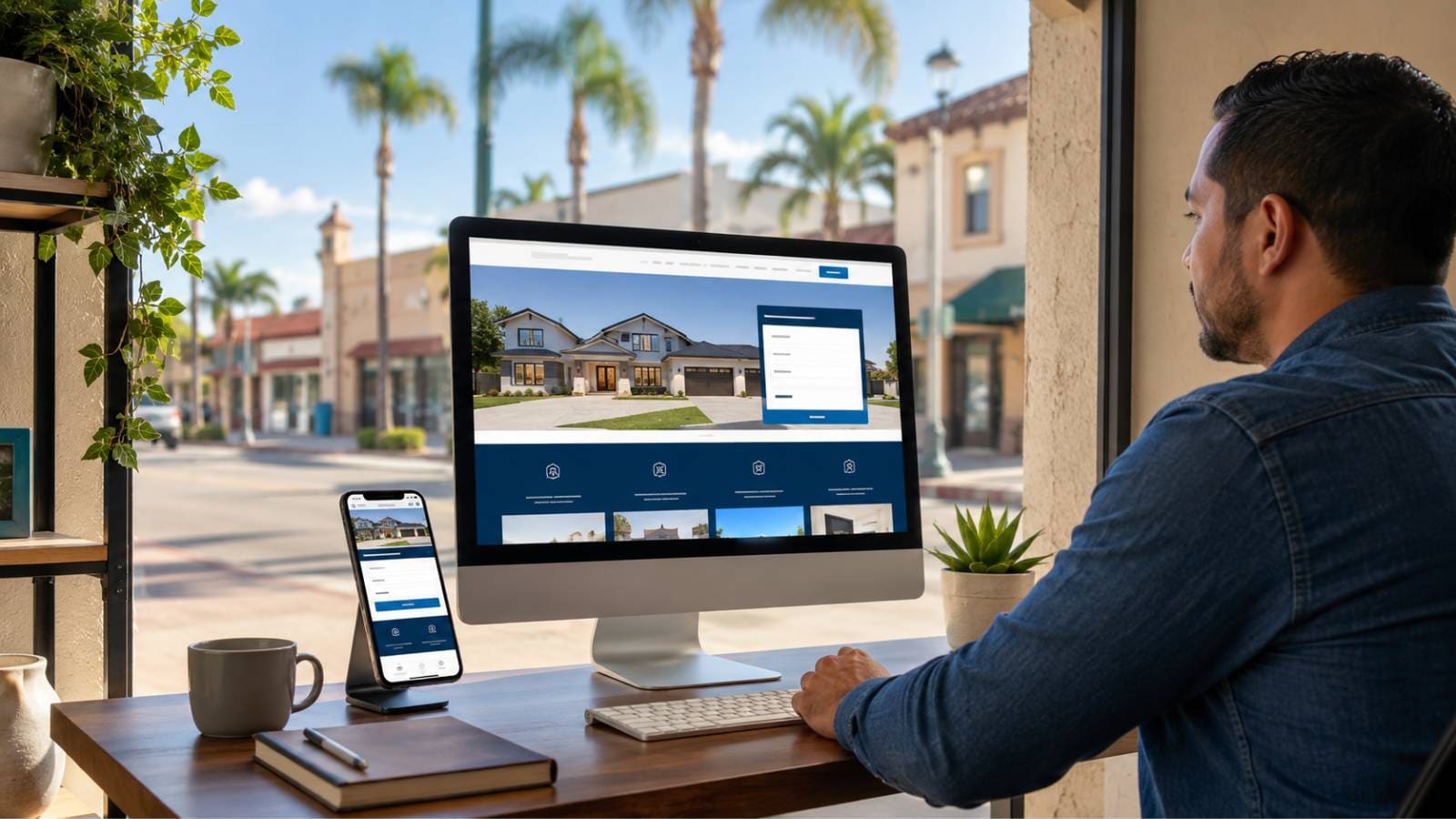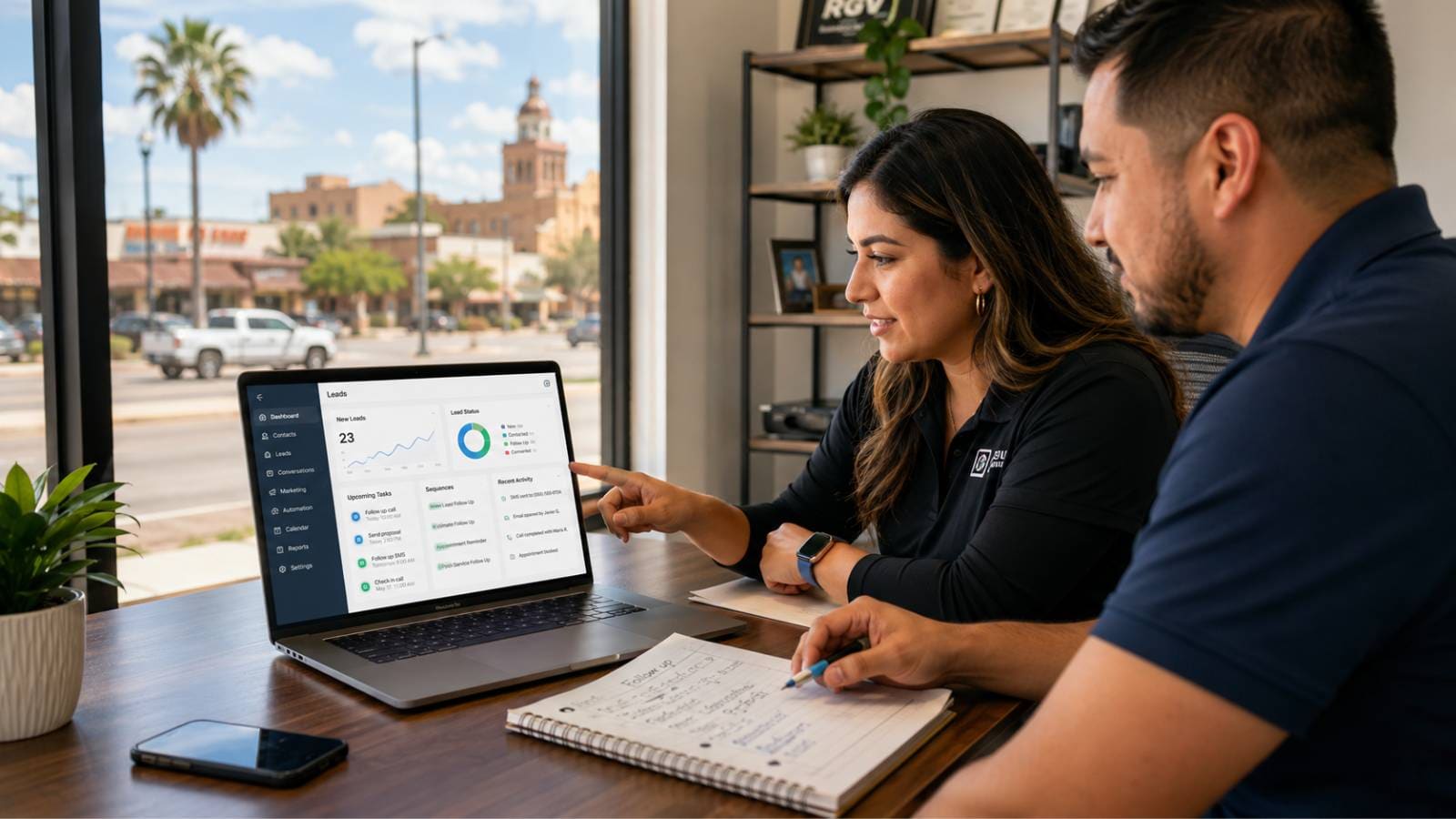
In Hidalgo County, 80.1% of residents age five and older speak a language other than English at home, and in Cameron County the figure is 72.2% (Census QuickFacts, Hidalgo; Cameron). Yet many Valley businesses still send every confirmation, reminder, and follow-up in English only, from a system that treats every lead the same. Interest is rarely the problem. Follow-up is.
A potential customer fills out a form after hours. Someone calls during lunch. A Facebook message comes in while the owner is helping another customer. A Google Ads lead lands in the inbox, but the salesperson does not see it until the next morning. By then, the customer may have already called a competitor in McAllen, Edinburg, Brownsville, Harlingen, Pharr, Mission, Weslaco, or another nearby city.
That is where marketing automation becomes useful. Not as a replacement for real customer service, and not as a magic tool that closes deals by itself. Good automation gives local businesses a faster, cleaner, more consistent way to respond to leads, organize follow-up, and stay in touch with people who are already interested.
In the Rio Grande Valley, where many buying decisions still depend on trust, referrals, bilingual communication, and local reputation, the best automation strategy should feel human. It should help your team answer faster, remember details, send the right message at the right time, and make it easier for customers to take the next step.
Why Follow-Up Speed Matters More Than Ever
Modern customers move quickly. They can compare businesses, read reviews, check hours, request quotes, and contact multiple providers from the same phone. That behavior is especially important in local service categories where the customer has a clear need: HVAC repair, legal help, medical appointments, auto services, home remodeling, insurance, real estate, financial services, dental care, roofing, or professional consulting.
In those moments, a lead is not just a name in a form submission. It is a person actively trying to solve a problem. If the business waits too long, the lead may not remember who they contacted, may become frustrated, or may simply choose the first company that answers clearly.
Automation helps close the gap between interest and response. A good system can confirm the inquiry, route the lead to the right person, create a task, send a calendar link, notify the sales team, trigger a missed-call text, or start a short nurture sequence without forcing someone to manually manage every step.
The goal is not to overwhelm the customer. The goal is to remove silence.
The RGV Market Rewards Businesses That Feel Responsive and Local
The Rio Grande Valley is not one single market. It is a connected region made up of local communities with different customer patterns, commute routes, languages, incomes, industries, and expectations. A business serving McAllen may also draw customers from Mission, Pharr, Edinburg, Alamo, San Juan, and Weslaco. A company in Brownsville may also need to reach customers in Los Fresnos, Harlingen, San Benito, and Port Isabel.
That matters because automation should not sound like a generic national brand. RGV customers often want practical answers: Do you serve my area? Do you speak Spanish? Can I book today? What documents do I need? How much does it cost? Can someone call me back? Where are you located? Are you open Saturday?
The right follow-up system can answer those questions faster while still preserving the local tone of the business. A home service company might segment leads by city. A clinic might route Spanish-language inquiries to the right staff member. A dealership or finance company might send different follow-up steps depending on whether the customer asked about approval, inventory, trade-ins, or appointment scheduling. A law office might send a simple intake confirmation and explain what happens next.
What Marketing Automation Actually Means for a Local Business
Marketing automation can sound complicated, but the concept is simple: use software to trigger the next best action based on what a customer does.
For a local business, that may include sending an instant confirmation when someone submits a website form; texting a missed caller with a polite follow-up message, when consent and compliance requirements are handled correctly; assigning new leads to a salesperson or office manager inside a CRM; sending appointment reminders before a consultation or service visit; creating follow-up tasks when a lead has not responded; segmenting contacts by service interest, location, language, or stage; sending helpful email sequences after a quote, estimate, consultation, purchase, or appointment; and re-engaging past customers with seasonal reminders, service updates, or educational content.
The point is not to automate every customer interaction. Some conversations need a real person. The point is to make sure no serious lead gets ignored because the team is busy, the inbox is messy, or the business does not have a clear process.
Start With the Lead Sources You Already Have
Before choosing tools, RGV businesses should map where leads actually come from. Most local companies already have more lead sources than they realize: calls from Google Business Profile, forms from the website, messages from social media, direct emails, referrals, paid ads, organic search traffic, landing pages, quote forms, event signups, or repeat customer inquiries.
If those sources are not connected to one system, the business ends up with a fragmented lead process. Someone checks Facebook. Someone else checks email. A third person answers the phone. The result is inconsistent follow-up and unclear accountability.
A better approach is to build a simple lead intake map: Where does the lead come from? What information does the business receive? Who is responsible for responding? How quickly should the first response happen? What should the first message say? What happens if the customer does not answer? When does the lead move from new inquiry to booked appointment, quoted, won, lost, or nurture?
Once that map is clear, automation becomes easier. The software should support the process, not define it.
The Core Automation Workflows Most RGV Businesses Should Consider
1. Instant Lead Confirmation
Every form submission should trigger an immediate acknowledgment. The message should thank the customer, confirm what they requested, and explain what happens next.
2. Internal Lead Notification and Assignment
Route new leads to the right person based on service, language, urgency, or location. Create a CRM task with a deadline so nothing sits unread.
3. Missed-Call Recovery
Notify the team, create a callback task, and, where appropriate and compliant, send a polite text acknowledging the missed call. Especially useful for businesses where staff are often with customers, at job sites, in appointments, or away from the front desk.
4. Appointment Reminders
A reminder sequence might include an email confirmation, a text reminder the day before, and a same-day reminder with location, parking, documents needed, or rescheduling instructions.
5. Quote and Estimate Follow-Up
Many leads do not convert immediately. A quote follow-up sequence can remind the customer of the value, answer common objections, invite questions, and make it easy to accept the quote or book the next step.
6. Long-Term Nurture
Not every lead is ready today. A simple nurture system can keep the business visible with helpful educational content, service reminders, seasonal tips, local updates, or offers that make sense.
CRM Hygiene: The Part That Makes Automation Work
Marketing automation depends on clean data. If a CRM is messy, automation will only make the mess move faster.
For RGV businesses, CRM hygiene usually starts with the basics: correct names, valid phone numbers, valid email addresses, source tracking, city or service area, service interest, lead status, assigned owner, last contact date, and next step. A practical CRM pipeline might include stages such as New Lead, Attempted Contact, Appointment Scheduled, Quote Sent, Follow-Up Needed, Won, Lost, and Long-Term Nurture.
Use Automation to Connect SEO, PPC, Social, and Email
Automation works best when it connects the rest of the marketing system. A strong Rio Grande Valley lead generation engine should not treat SEO, PPC, social media, website design, content marketing, video, and email as separate islands.
Compliance and Trust
For SMS and automated calling, businesses should be cautious with consent, opt-out language, recordkeeping, and do-not-call considerations. The legal environment around automated outreach and text messaging continues to evolve, so the safest operational approach is to collect explicit consent, document it, and avoid importing questionable lists. A strong automation system should protect the business as much as it helps the business grow.
What to Measure After Launching Automation
Marketing automation should be measured by business outcomes, not just software activity. Useful metrics include average response time by lead source, percentage of new leads contacted within the desired window, appointment booking rate, quote follow-up completion rate, lead-to-customer conversion rate by source, missed-call recovery rate, email open and click trends, and pipeline value by service, city, or campaign. The number of leads with no next step assigned is especially important, that is usually a process problem, and automation should make it visible.
Making Follow-Up Feel Local
In the Valley, customers notice when a business replies in their language, remembers their last visit, and does not make them repeat themselves. That is what good automation should protect. We built this kind of bilingual follow-up for Legacy Home Care Services, connecting English and Spanish campaigns to one inquiry flow (leer en español).
For many small and mid-sized businesses, the challenge is not buying software. The challenge is building the right system around the way the business actually operates. Our marketing automation service is built around that. BRT Digital can help map the lead journey, clean up the website conversion path, connect forms and ad campaigns to the CRM, write follow-up sequences, improve reporting, and build workflows that support real sales conversations.
If your business is getting leads but follow-up feels inconsistent, BRT Digital can help you build a practical automation system that responds faster, organizes opportunities, and keeps local customers moving toward the next step. Request a marketing automation audit to get started.