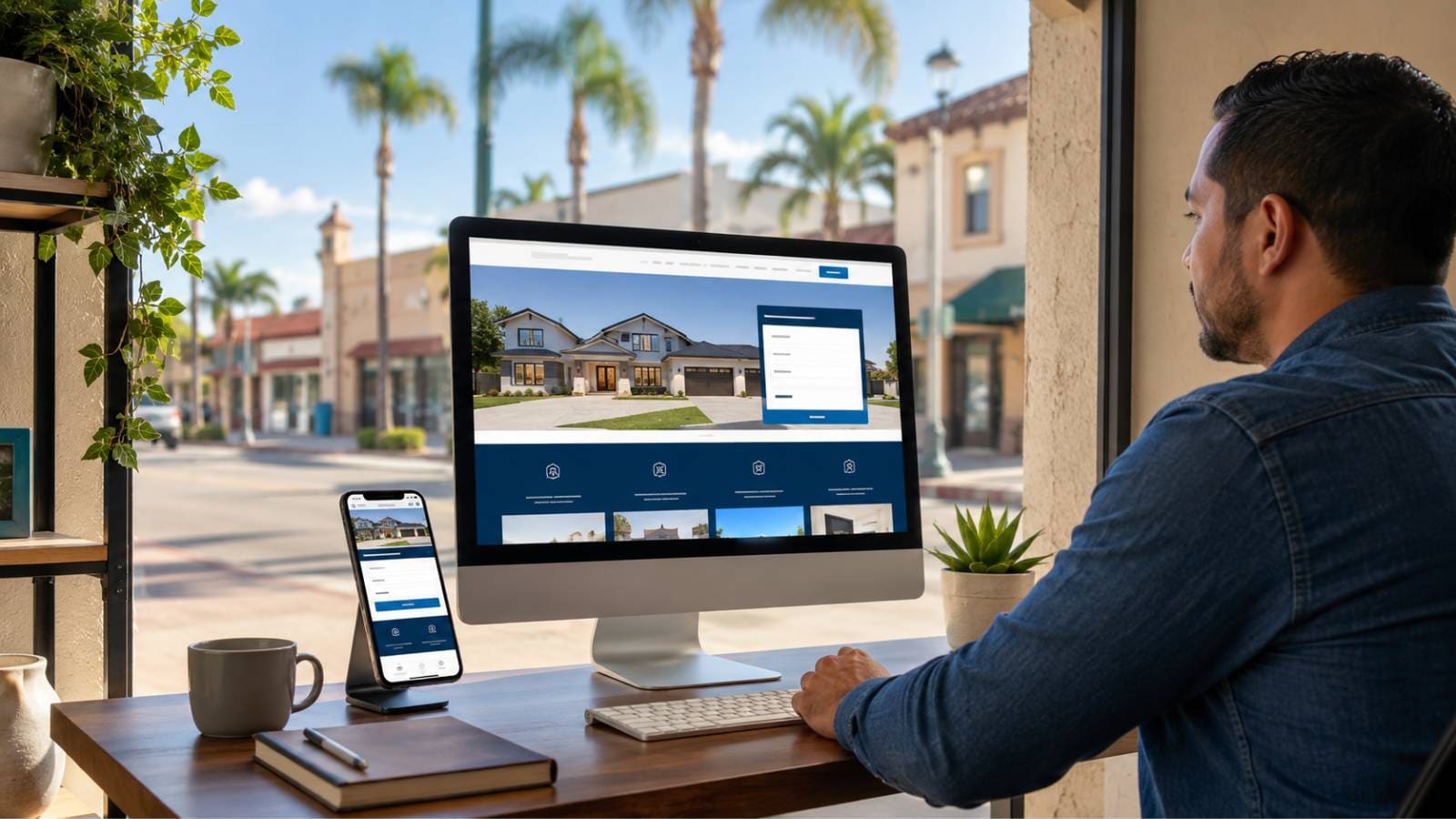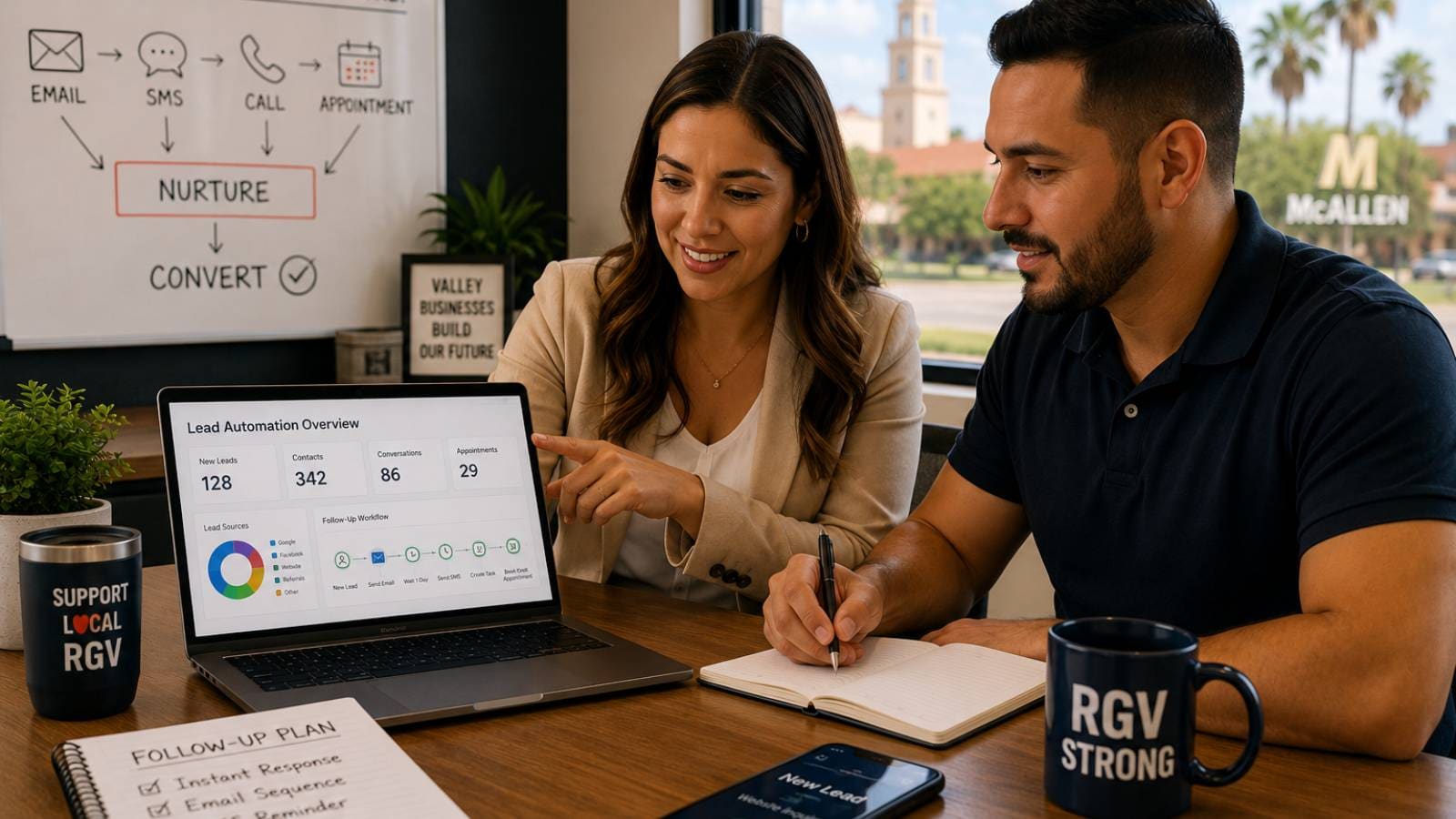
Getting people to a website is only half the job. The bigger question is what happens after they arrive.
For many Rio Grande Valley businesses, the website already receives some traffic from Google, social media, referrals, paid ads, email, or word of mouth. People visit the site, look around, maybe check services or pricing, and then leave without calling, submitting a form, booking an appointment, or asking for a quote. That does not always mean the marketing failed. Sometimes the problem is that the website did not make the next step clear enough.
Conversion rate optimization, often shortened to CRO, is the process of improving a website so more visitors take a meaningful action. For a local business, that action is usually simple: call, request a quote, schedule an appointment, fill out a form, get directions, start a chat, download a guide, or contact the team.
CRO is especially important in the Rio Grande Valley because many local markets are getting more competitive online. McAllen, Edinburg, Pharr, Mission, Brownsville, Harlingen, Weslaco, San Benito, Mercedes, Alamo, and surrounding communities are full of businesses trying to win the same customer attention. If a company already invests in SEO, PPC, social media, content, or video, the website has to do more than look nice. It has to convert.
CRO is not about tricking people into becoming leads. It is about reducing confusion, answering the right questions, building trust, and making it easier for serious prospects to contact the business.
Why CRO Matters for RGV Businesses in 2026
The Rio Grande Valley is a growing regional market with a large, mobile-first customer base and a strong mix of local service businesses, healthcare providers, dealerships, restaurants, retailers, contractors, professional firms, and home services. Recent reporting based on U.S. Census estimates shows the four-county region of Hidalgo, Cameron, Starr, and Willacy at roughly 1.4 million residents.
As competition increases, businesses often respond by buying more traffic. They spend more on Google Ads, push harder on social media, publish more content, or redesign their website. Those efforts can help, but they are incomplete if the site does not turn visitors into measurable opportunities.
If a local HVAC company, clinic, law office, dental practice, dealership, or remodeling contractor spends money to bring 1,000 qualified visitors to its website and only a small percentage contact the business, the company may assume it needs more traffic. But if the real issue is a weak form, unclear offer, hidden phone number, slow mobile experience, thin service page, or lack of trust signals, more traffic will simply create more wasted visits.
What Counts as a Conversion?
A conversion does not have to mean an immediate sale. For most local businesses, a conversion is any measurable step that moves a potential customer closer to revenue: phone calls from the website, form submissions for quotes or appointments, clicks to call on mobile devices, clicks for directions, online booking completions, text or chat inquiries, newsletter or offer signups, downloads of guides or service information, and repeat visits from remarketing, email, or organic search.
The right conversion depends on the business model. A medical practice may care about appointment requests. A contractor may care about estimate forms. A dealership may care about calls, finance applications, and inventory inquiries. The CRO strategy should match the business outcome, not just the website design trend.
Start With the Customer Journey, Not the Button Color
CRO is often reduced to surface-level advice like changing a button color or moving a form higher on the page. Those details can matter, but they should not come first. The stronger starting point is understanding the customer's journey.
A Rio Grande Valley customer may arrive on a site from several different paths. They might search "roof repair near me," click a paid ad for a dentist in McAllen, see a Facebook post from a local restaurant, scan a QR code at an event, or get referred by a friend. Each path creates a different expectation.
A good CRO review asks: What problem is the visitor trying to solve? What page did they land on first? What information do they need before contacting the business? What might make them hesitate? Is the next step obvious on desktop and mobile? Does the page prove that the business serves their city or neighborhood? A conversion problem is usually a communication problem before it is a design problem.
Mobile Experience Is a CRO Issue
For local businesses, mobile experience is not optional. Many visitors are researching from a phone, comparing options while away from home, checking hours, clicking from Google Maps, or calling directly from a search result. If the site is slow, crowded, hard to read, or difficult to tap, the business can lose qualified leads before the visitor even understands the offer.
A website can generate calls, but the team still has to answer, return missed calls, and track outcomes. CRO, call tracking, and follow-up operations should work together.
Forms Should Be Easy, But Not Careless
Website forms are another common conversion point, but many businesses ask for too much information too early. A long form may be appropriate for a formal application, medical intake, financing request, or detailed quote. But for a first inquiry, simpler is usually better.
If the goal is to start a sales conversation, the form might only need name, phone, email, service needed, city, and a short message. If the business needs more detail to give a useful estimate, the form can include conditional fields that appear only when relevant. Good form design should ask only for information the business will actually use, label fields clearly, make required fields obvious, work cleanly on mobile keyboards, and confirm successful submission with a helpful message.
Trust Signals That Feel Local
Useful trust signals include certifications, licenses, years in business, professional associations, transparent process explanations, examples of work, case studies, before-and-after photos, project galleries, bilingual messaging when relevant, and simple privacy reassurance near sensitive forms.
Trust signals should be specific. "We care about customers" is less persuasive than a short explanation of what the customer can expect after requesting a quote. "Serving the Rio Grande Valley" is less useful than naming the communities the business actually serves.
Build Landing Pages Around One Job
A common conversion problem is trying to make one page do too many jobs. A homepage has to introduce the business broadly. A landing page should usually be more focused.
If an RGV business is running Google Ads for a specific service, the ad should not send traffic to a generic homepage unless that homepage is clearly the best match. A person searching for emergency AC repair, dental implants, used trucks, family law consultations, or commercial door service should land on a page that directly matches that intent.
Measure Real Outcomes
Page views and bounce rate are useful, but calls, forms, appointments, and qualified leads matter more. CRM close rates by lead source, call tracking outcomes, heatmaps and session recordings for high-traffic pages, customer service questions that repeat often, and sales team feedback about lead quality often produce stronger insights than dashboards alone.
If five customers ask the same question before booking, that question probably belongs on the website. If the sales team says leads are confused about pricing, service area, documents, or next steps, the page probably needs clearer copy.
CRO and SEO Should Work Together
SEO brings qualified visitors to the website. CRO helps those visitors take action. If SEO pages do not convert, organic traffic may look good in reports but fail to support revenue.
A Practical CRO Checklist for Rio Grande Valley Businesses
- Is the main CTA visible within the first screen on mobile?
- Can visitors call with one tap?
- Does each key page explain who the service is for?
- Does the page clearly state the service area?
- Are forms short enough for the stage of the buyer journey?
- Are reviews, photos, and trust signals near conversion points?
- Is page speed acceptable on common mobile devices?
- Are leads tracked, routed, and answered promptly?
Final Thoughts: More Traffic Is Not Always the First Answer
Rio Grande Valley businesses often ask how to get more traffic, more clicks, more followers, or more impressions. Those goals can matter, but they should not distract from the bigger question: is the current traffic turning into real opportunities?
For RGV businesses, CRO is not just a website tactic. It is a practical growth discipline: make it easier for local customers to say yes.
Ready to turn more website traffic into leads? Request a website conversion audit and we will identify the highest-impact CRO improvements for your Rio Grande Valley site.