For many Rio Grande Valley businesses, social media is not just a place to post flyers or seasonal promotions. It is where people decide whether a business feels real, trustworthy, responsive, and worth contacting. A customer may first hear about a company from a friend, then check its Facebook page, scan its Instagram posts, look for recent reviews, compare it to another local option, and finally send a message or call.
That journey matters because the Valley is relationship-driven. People ask relatives for recommendations, share local posts in community groups, follow school and city events, support small businesses they recognize, and pay attention to how companies show up during everyday moments. In McAllen, Edinburg, Mission, Pharr, Weslaco, Harlingen, Brownsville, San Benito, and communities across the four-county region, visibility is only part of the equation. Trust is what turns attention into action.
As of 2026, the Rio Grande Valley has more than 1.4 million residents across Hidalgo, Cameron, Starr, and Willacy counties. That gives local businesses a large regional audience, but it also means the market is crowded. A business cannot rely on one boosted post, one pretty graphic, or one viral video. Social media needs to support the same business goals as the rest of the digital presence: calls, messages, form submissions, store visits, appointments, consultations, and repeat customers.
The most effective social media strategy for RGV businesses is practical. It should help people understand who you are, what you do, where you serve, why you are credible, and what to do next. The goal is not to chase every trend. The goal is to become familiar and believable in the specific communities you serve.
Why Local Trust Matters More Than Posting Frequency
A common mistake is assuming that social media success comes from posting more often. Frequency helps, but only when the content makes the business easier to trust. A page that posts every day can still feel weak if every post is a generic graphic, recycled caption, or vague promotion. A page that posts three strong updates per week can outperform it if those posts answer real questions, show real people, and give customers a clear next step.
Trust on social media comes from repeated signals. People want to see that the business is active, local, responsive, consistent, and legitimate. For a home service company, that might mean jobsite photos, before-and-after examples, maintenance tips, and quick videos explaining common problems. For a medical or wellness office, it may mean staff introductions, patient education, location details, insurance reminders, and appointment instructions. For a restaurant, boutique, dealership, gym, attorney, or local contractor, the trust signals will look different, but the principle is the same: show enough real context that a customer feels comfortable taking the next step.
In the Valley, this also means understanding bilingual and bicultural expectations. Not every post needs to be in English and Spanish, but many businesses should consider bilingual captions, Spanish-language video clips, or occasional content that reflects how customers actually communicate. The point is not to perform local culture. The point is to reduce friction for real customers.
The Role of Social Media in the 2026 Customer Journey
Social media is rarely the entire customer journey by itself. It usually works as one layer in a larger decision. Someone may discover a business through TikTok or Instagram, validate it through Facebook reviews or Google, visit the website, then call from the Google Business Profile. Another person may see a Facebook post from a friend, search the business name, and compare photos, hours, reviews, and services before reaching out.
That means social media should not live in a silo. It should connect with search, paid ads, website content, reviews, email, and local reputation. Google now allows businesses to add social media links to a Business Profile, including Facebook, Instagram, LinkedIn, TikTok, X, Pinterest, and YouTube. This reinforces a basic reality: customers do not separate your brand into channels. They see one business across many touchpoints.
National platform usage also supports a multi-channel approach. Pew Research Center's 2025 social media research found that YouTube and Facebook remain the most widely used online platforms among U.S. adults, while Instagram, TikTok, WhatsApp, and Reddit have grown in recent years. For RGV businesses, this does not mean every company needs to use every platform. It means the right platform mix should be based on the customer, the offer, and the kind of trust the business needs to build.
Choosing the Right Platforms for an RGV Business
The best platform is not the one with the loudest trend. It is the one where the business can consistently reach the right local audience with the right message.
| Platform | Best Role for Local Businesses | RGV Use Case |
|---|---|---|
| Community visibility, reviews, events, local sharing, older and family audiences. | Promote local offers, service updates, holiday hours, community involvement, customer stories. | |
| Visual trust, short videos, staff culture, product or service proof, brand personality. | Show team, location, behind-the-scenes work, customer education, before-and-after visuals. | |
| TikTok | Discovery, educational clips, informal personality, younger audiences. | Answer common questions, explain services, show quick transformations, humanize the business. |
| YouTube | Deeper education, search-friendly video, testimonials, longer-form explanations. | Service explainers, FAQs, facility tours, founder videos, customer education. |
| B2B credibility, hiring, partnerships, professional services, leadership content. | Useful for agencies, consultants, builders, healthcare groups, finance, legal, recruiting, vendors. | |
| WhatsApp / Messenger | Conversation, quick questions, appointment coordination, lead follow-up. | Reduce friction for customers who prefer messaging before calling or filling out a form. |
Five Things Every RGV Social Page Should Communicate
- What you do and where you serve. Customers should not have to guess.
- Proof you can deliver. Reviews, real photos, before-and-afters, completed work.
- Personality and people. Staff intros, owner videos, behind-the-scenes clips.
- Useful answers. Address the questions your sales team hears every week.
- Clear next steps. Phone numbers, booking links, service areas, DM prompts.
What RGV Businesses Should Post Each Month
A useful monthly content calendar should balance visibility, trust, and lead generation. For most local businesses, a realistic starting point is 12 to 20 posts per month across the main platforms, supported by short-form video when possible.
A practical monthly mix:
- 4 educational posts that answer common customer questions.
- 3 to 4 proof posts, reviews, testimonials, project examples, before-and-after.
- 2 to 3 local relevance posts tied to neighborhoods, events, or seasons.
- 2 staff or behind-the-scenes posts that humanize the brand.
- 2 direct conversion posts inviting people to call, book, or request a quote.
Short-Form Video Without Gimmicks
Strong video ideas for RGV businesses include:
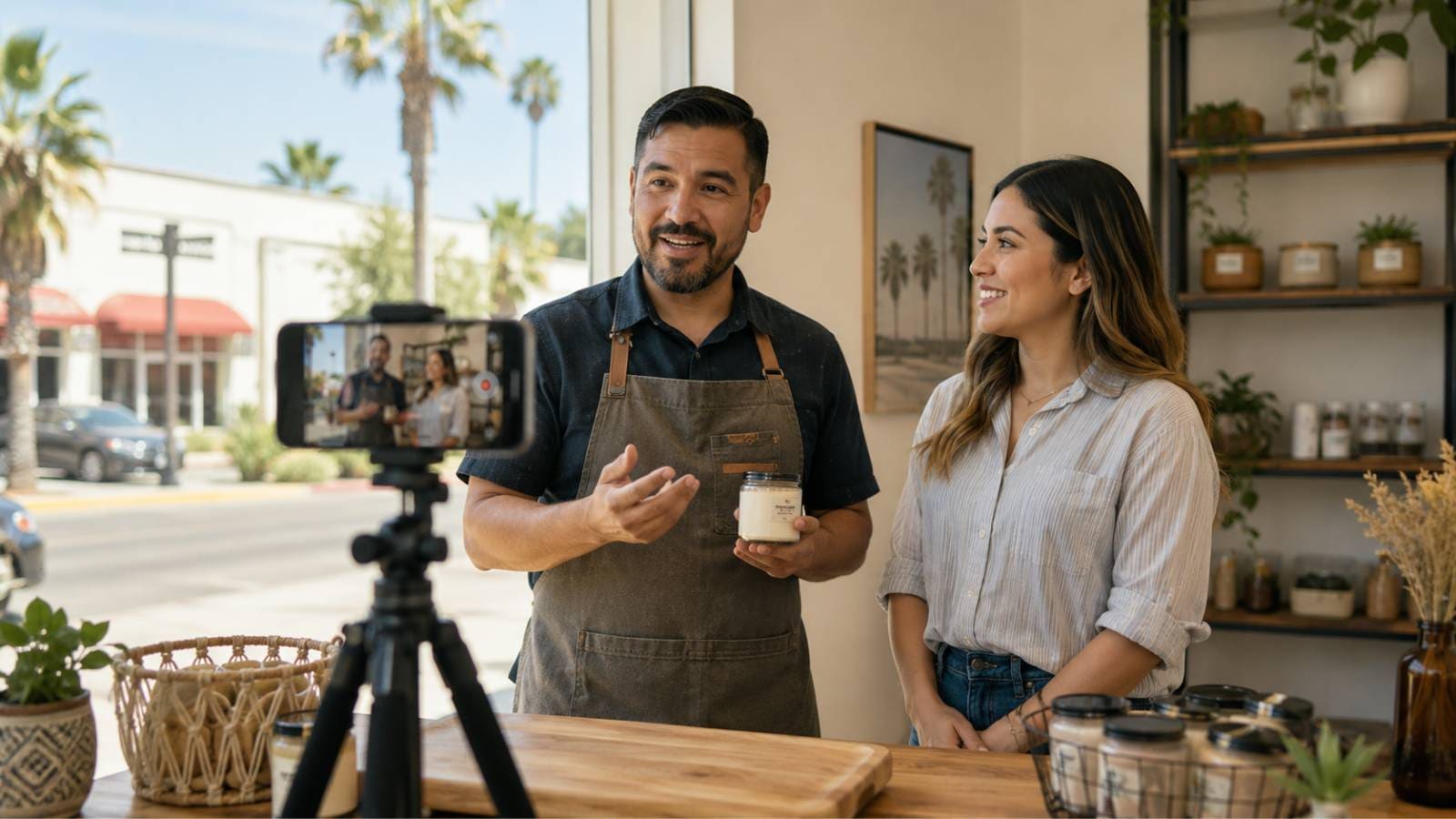
- A technician explaining one common issue customers should not ignore.
- A team member showing how to prepare for an appointment.
- A quick walkthrough of the showroom, office, shop, jobsite, or facility.
- A before-and-after service transformation.
- A business owner answering a common pricing or service-area question.
- A bilingual FAQ clip for customers who prefer Spanish or Spanglish.
- A local event recap showing community involvement.
The key is consistency and clarity. One helpful video every week can build more trust than a batch of polished videos posted once and then abandoned. Reuse strong videos across Instagram Reels, Facebook Reels, TikTok, YouTube Shorts, and website pages when appropriate.
Common Social Media Mistakes RGV Businesses Make
- Posting only sale graphics with no educational or human content.
- Using the same caption style every time, making the page feel automated.
- Ignoring bilingual opportunities when the customer base would benefit.
- Posting videos with no clear point, hook, location signal, or next step.
- Letting messages and comments sit unanswered for days.
- Running ads without tracking calls, forms, messages, or booked appointments.
A Practical 90-Day Social Media Plan for an RGV Business
Days 1–30: Build the foundation. Audit Facebook, Instagram, TikTok, LinkedIn, YouTube, and your Google Business Profile for consistency. Update bios, phone numbers, service areas, hours, and links. Add social links to the GBP where appropriate. Define three to five content pillars based on customer questions. Collect real photos and videos from the team, location, work, and community.
Days 31–60: Publish and learn. Post consistently using a balanced calendar of education, proof, local relevance, human content, and CTAs. Create at least one short-form video per week. Respond to comments and messages quickly. Test bilingual or Spanish content when it fits. Track which topics create questions, calls, messages, or website visits.
Days 61–90: Scale what works. Double down on the post types and topics that produced real engagement and leads. Add small paid boosts behind the best-performing organic posts. Tighten the conversion path from social to website to form or call. Build a reporting rhythm that connects social to actual business outcomes.
Final Thoughts
For RGV businesses, the next step should be a practical social media and digital presence audit. BRT can review your profiles, Google Business Profile, website path, review presence, content mix, and lead tracking to identify where trust is being built, and where customers are dropping off.
Want a clearer social media plan for your Valley business? Request an audit from BRT Digital and we will identify the highest-impact changes first.