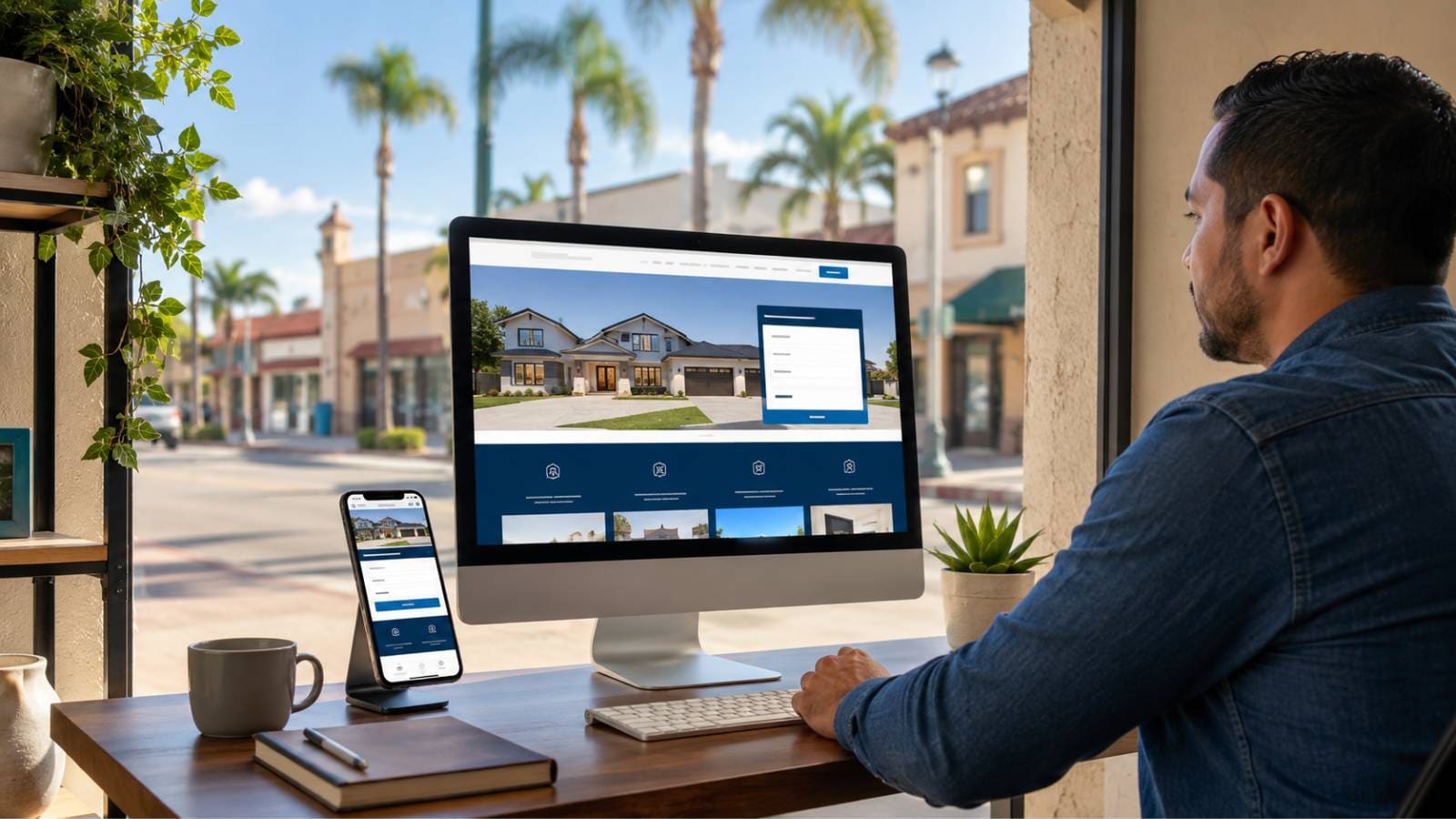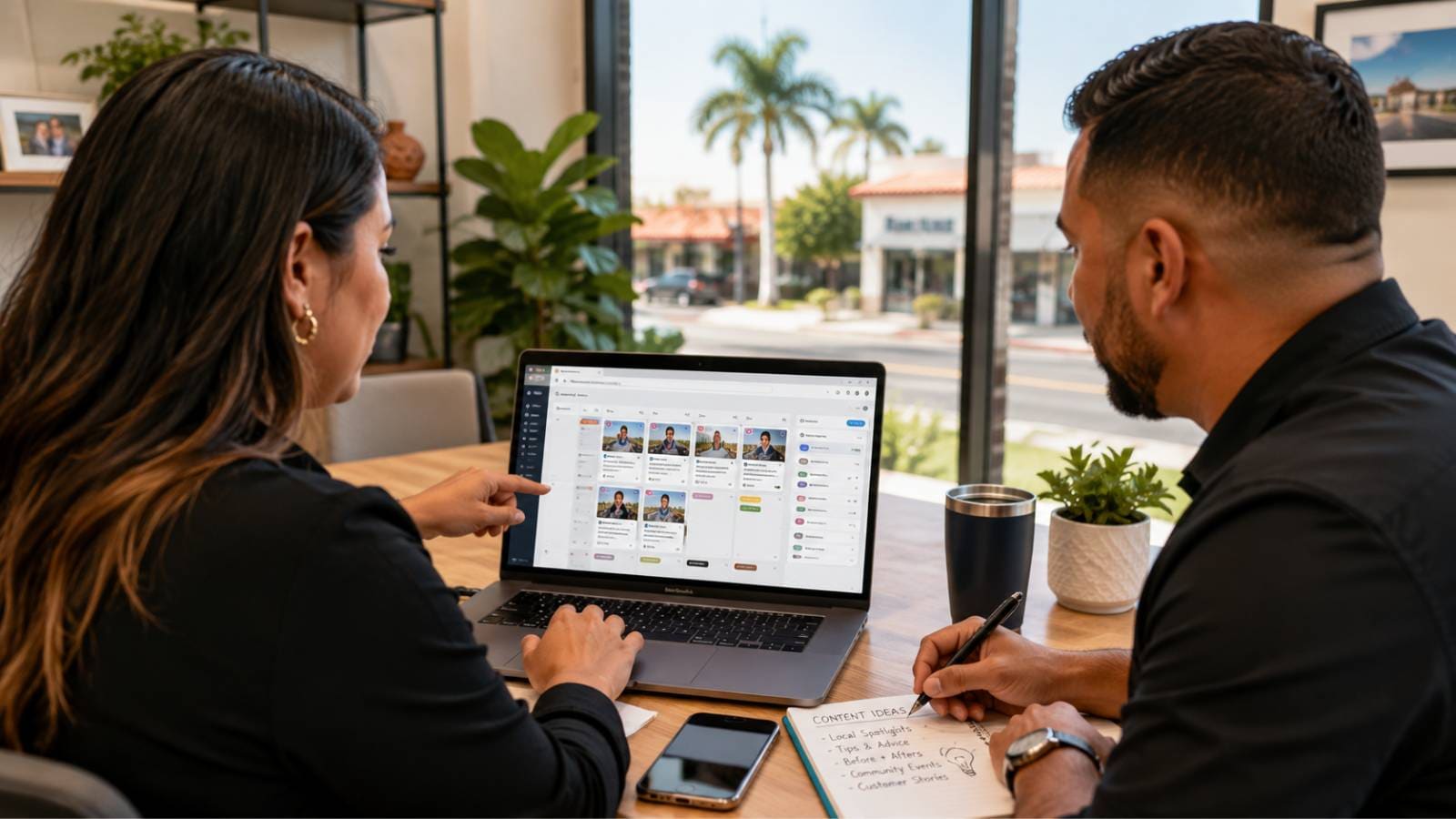
For many Rio Grande Valley businesses, the website is already live, the Google Business Profile is already claimed, and the social media pages already exist. The problem is not always visibility in the broad sense. The problem is that the business does not have enough useful, local, search-friendly content to answer the questions customers are asking before they call, book, visit, or request a quote.
That is where content marketing becomes more than a branding exercise. A well-built local blog can help an RGV business show up for more search intent, explain services more clearly, support paid advertising, educate hesitant buyers, and give sales teams better resources to share with prospects. It can also make the business feel more credible before the first conversation ever happens.
The key is to treat blogging as a lead-generation system, not as a monthly writing chore. The goal is not to publish random articles because someone said Google likes fresh content. The goal is to create useful pages that answer real questions, reflect local market conditions, and guide the reader toward the next reasonable step.
For businesses in McAllen, Edinburg, Mission, Pharr, Weslaco, Harlingen, Brownsville, and the broader Valley, local blog content can be one of the most practical ways to compete online. It gives smaller businesses a way to demonstrate expertise, earn trust, and capture demand that would otherwise go to larger competitors, directories, or national brands.
Why Local Content Matters in the Rio Grande Valley
The Rio Grande Valley is a serious regional market. Recent reporting based on U.S. Census estimates shows the four-county region of Hidalgo, Cameron, Starr, and Willacy at roughly 1.4 million residents, with incorporated communities across the Valley reaching about 1 million residents in 2025. That population base supports a wide range of local demand: healthcare, home services, auto, legal, education, real estate, restaurants, retail, construction, professional services, and B2B vendors.
But the RGV is not one uniform audience. A customer in Brownsville may search differently than a customer in McAllen. A family in Weslaco may care about payment options, distance, and bilingual communication. A business owner in Edinburg may want proof that a vendor understands local competition, not just generic marketing advice. Local blogs allow a business to speak to those differences in a useful way.
This matters because people rarely become leads after seeing only one page. They compare. They search multiple times. They ask specific questions. They look for reviews, examples, pricing context, location details, and signs that the business understands their situation. Blog content can support all of those moments.
A strong local blog helps an RGV business:
- Capture informational searches from people who are researching before they are ready to call.
- Support service pages by linking readers toward high-value conversion pages.
- Build local trust through market-specific examples, FAQs, and practical guidance.
- Improve sales conversations by answering common objections before the prospect reaches out.
- Create reusable assets for email, social media, sales follow-up, and paid landing pages.
Local Blogs Should Start With Search Intent
The most common mistake with business blogging is starting with the company instead of the customer. Many posts are written around what the business wants to say: announcements, awards, generic tips, or broad industry topics. Those can have a place, but lead-generating content should start with what the customer is trying to solve.
Search intent is the reason behind the search. Someone searching "how much does AC repair cost in McAllen" is not looking for the same thing as someone searching "best AC company near me." Someone searching "what documents do I need to finance a used car in Texas" is not in the same mindset as someone searching a dealership name. A good blog strategy maps these different intents and creates content for each stage of the customer journey.
For RGV businesses, useful blog topics often come from everyday customer questions:
- What should I know before hiring this type of company?
- How much does this service usually cost?
- What should I compare before choosing a provider?
- What is different about doing this in South Texas?
- What documents, steps, timeline, or expectations should I prepare for?
- What mistakes should I avoid?
These are not fluffy topics. They are trust-building topics. When a blog answers them honestly, the business becomes more useful before it ever asks for the sale.
How Blogs Support SEO Without Trying to Trick Google
Google's current content guidance emphasizes helpful, reliable, people-first content. That means the strongest blog strategy is not about writing for algorithms first. It is about creating content that genuinely helps the intended audience, then structuring it so search engines can understand it.
For local businesses, that means avoiding the old-school habit of publishing thin city pages or generic posts with swapped-out city names. A useful RGV blog should include real context, clear answers, practical examples, and a next step that makes sense for the reader.
SEO-friendly local blog content usually includes:
- A specific topic that answers one clear question or solves one clear problem.
- Natural local relevance that references the Valley only where it helps the reader.
- Useful structure with headings, bullets, examples, and FAQs.
- Internal links to relevant service pages, contact pages, case studies, or related articles.
- Original perspective that reflects what the business actually knows from serving local customers.
A Local Blog Should Move Readers Toward a Business Action
A blog post should be helpful, but it should not be a dead end. If a reader spends three or four minutes learning from the article, the page should make the next step obvious. That does not mean every article needs an aggressive sales pitch. It means the CTA should match the reader's stage of intent.
For RGV businesses, practical blog CTAs might include:
- "Need help choosing the right service? Request a local consultation."
- "Serving McAllen, Edinburg, Mission, and nearby Valley communities. Call today."
- "Compare your options with a free estimate."
- "Want a content plan for your local business? Book a strategy call."
- "Not sure where to start? Ask us to review your current website and content."
Internal Links Turn Blog Posts Into a Website System
A great blog is not a collection of standalone pages. It is a connected network. Internal links between posts, service pages, location content, and conversion pages help readers find the next thing they need and help search engines understand topical depth.
A practical RGV blog plan should link articles to the related service page, to nearby market-specific blog posts, to relevant case studies when honest examples exist, and to a clear contact or audit CTA.
Blogs Also Support Social Media, Email, and Sales Follow-Up
One of the biggest advantages of content marketing is that a strong blog post can be repurposed across multiple channels. A local article can become several social media posts, a short video outline, an email newsletter, a sales follow-up resource, a Google Business Profile post, or a landing page section.
This is especially useful for small and mid-sized RGV businesses that do not have unlimited marketing resources. One well-written blog can create a month of supporting content if it is planned correctly.
What Makes a Blog Feel Local Without Sounding Forced?
Local relevance should be specific, but it should not be awkward. A blog does not become useful just because it mentions McAllen, Brownsville, and Edinburg ten times. It becomes useful when the local context helps explain the customer's situation, climate, neighborhoods, regulations, bilingual communication patterns, or seasonal demand.
How Often Should an RGV Business Publish?
There is no universal publishing frequency. For many local businesses, a realistic starting point is two to four quality posts per month. The important word is quality. Publishing four shallow posts every month will not help much. Publishing one or two genuinely useful pieces tied to services, questions, and internal links can create more long-term value.
A balanced monthly plan might include one service-focused article, one FAQ or buyer education article, one local market article, and one comparison or decision-stage piece.
Measuring Whether Blog Content Is Working
Useful content marketing metrics include organic impressions and clicks in Google Search Console, engaged sessions and traffic quality in analytics, assisted conversions when readers later submit a form or call, internal link clicks from blogs to service pages, and sales team usage during follow-up.
Common Mistakes to Avoid
- Writing only what the business wants to say instead of what customers ask.
- Publishing without a CTA or internal links.
- Making unsupported claims, fake statistics, or fabricated case studies.
- Publishing and forgetting, strong posts should be updated as services and conditions change.
A Simple Local Blog Framework for RGV Businesses
A strong local blog post does not need to be complicated. Lead with the problem, add local context, explain the options, use proof, link to the next step, and answer a few FAQs at the end. This framework keeps the content readable, helpful, and tied to business outcomes.
Final Takeaway: Local Blogs Can Become a Lead Engine
For Rio Grande Valley businesses, content marketing is not about chasing trends or publishing for the sake of activity. It is about building a useful library of pages that answer real questions, support SEO, and guide the right people toward becoming customers.
Want a content plan that actually drives leads for your RGV business? BRT Digital can review your current blog, service pages, and local content opportunities and recommend where to focus next. Request a content and SEO audit or book a strategy call to map out your next quarter.